How to Import Air Fryers from China: A B2B Buyer's Guide
The global demand for air fryers continues to surge, driven by a consumer shift towards healthier cooking methods. For distributors and wholesalers, sourcing these popular appliances directly from manufacturing hubs in China offers a significant competitive advantage in both pricing and product diversity. Successfully navigating this process requires a clear understanding of the market, product specifications, and logistical framework. This guide provides a strategic roadmap for B2B buyers looking to import high-quality air fryers efficiently and reliably.
Key Sourcing Considerations for Air Fryers
Identifying the right product mix for your target market is the first critical step. Not all air fryers are created equal, and understanding the key differentiators will ensure you stock products that sell.
Capacity and Size
Air fryer capacity typically ranges from 2L to over 8L. A 3-5L model is often ideal for small families, while larger units cater to bigger households or commercial settings. Consider your customer demographics to determine the best capacity to import. A diverse portfolio that includes various kitchen appliances can help you capture a broader market.
Power and Performance
Power output, measured in watts (W), directly impacts cooking speed and crispiness. Models range from 800W to 1800W. Higher wattage means faster cooking but also higher energy consumption. Ensure the models you choose are configured for the voltage standards of your destination country (e.g., 110V for North America, 220-240V for Europe and Australia).
Features and Functionality
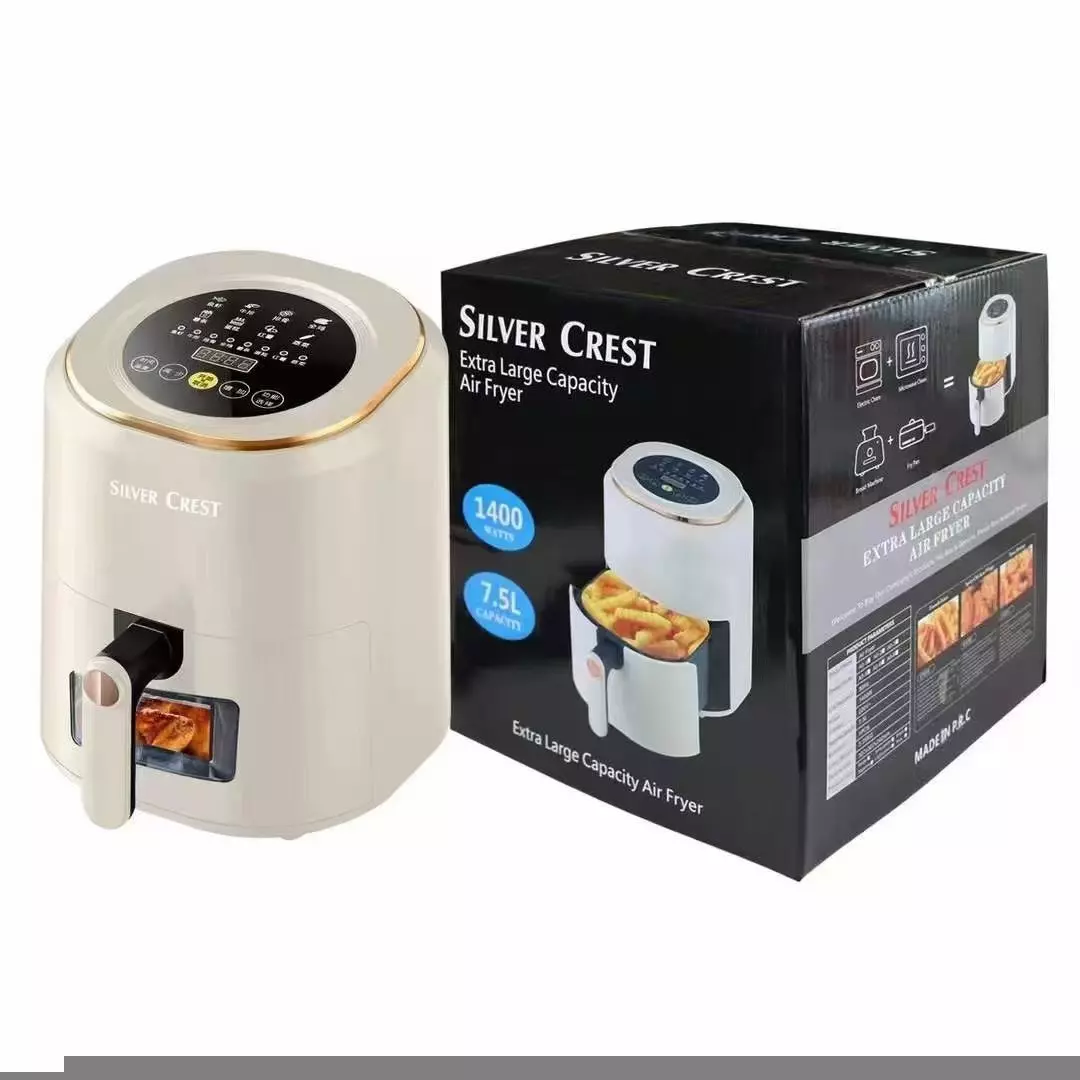
Beyond basic frying, many units offer additional features like baking, grilling, and roasting. Look for user-friendly interfaces, preset cooking programs, digital touchscreens, and companion mobile apps that enhance the user experience. A transparent basket, like the one found on this popular wholesale model, is a highly sought-after feature that allows users to monitor food without interrupting the cooking cycle.
Build Quality and Materials
The inner basket and other components that contact food should be made from food-grade, non-toxic materials. A robust outer housing, often made from high-quality PP or ABS plastic, and a reliable heating system are indicators of a durable product that will minimize returns and warranty claims.
Overcoming Common Sourcing Challenges
New importers often face a few common hurdles. Awareness of these issues is the best way to avoid them.
One major challenge is the discrepancy between product samples and the final mass-produced order. A reputable supplier will provide a Golden Sample—a pre-production unit that exactly matches the quality, materials, and performance of the bulk order. Always insist on this.
Another frequent issue is underestimating the total landed cost. The product's factory price is just one component. You must factor in shipping, import duties, taxes, insurance, and handling fees to calculate your true cost and final profit margin accurately.
Certifications and Compliance: Non-Negotiable for Import
Adherence to international safety and quality standards is paramount. Never work with a Chinese manufacturer who cannot provide verifiable certification documents. Key marks to look for include:
- CE Marking: Indicates conformity with health, safety, and environmental protection standards for the European Economic Area.
- RoHS: Ensures the product is free of specific hazardous materials like lead and mercury.
- FCC Certification: A mandatory requirement for electronic devices sold in the United States, proving they do not cause harmful interference.
- GS Certification: A safety certification for the German market and other European countries, often seen as a mark of high quality.
Request these certificates early in your discussions and verify their authenticity through the issuing bodies.
MOQ, Pricing, and the OEM/ODM Advantage
Minimum Order Quantity (MOQ) can vary significantly. Large factories may require MOQs of 1,000 units or more per model, while smaller, more flexible suppliers might offer MOQs as low as 100-500 units. Your order volume will influence the per-unit price.
China's true value for B2B buyers lies in its OEM (Original Equipment Manufacturing) and ODM (Original Design Manufacturing) capabilities. This allows you to:
- Customize Products: Add your private label, logo, and custom packaging to build your brand.
- Adjust Specifications: Modify features, colors, or accessories to meet specific market demands.
- Develop Unique Products: Work with an ODM partner to create a completely unique product from the ground up.
Exploring the full wholesale product list of a supplier will give you insight into their standard offerings and customization potential.
Why Partner with a Source Factory?
While trading companies can be useful, building a direct relationship with a source factory offers unparalleled benefits. You eliminate middleman markups, gaining more competitive pricing. Communication is more direct, allowing for clearer instructions and quicker problem resolution. Most importantly, you have greater control over the production process, quality checks, and intellectual property.
Conduct thorough due diligence: verify the factory's business license, visit their facility in person or via a virtual tour, and ask for references from their existing international clients.
Importing air fryers from China is a proven strategy for scaling your appliance business. By focusing on product quality, regulatory compliance, and a strong factory relationship, you can build a profitable and sustainable supply chain. The key is to move forward with a partner you trust, equipped with the right information to make informed decisions.
Related Products
You might also be interested in these products